Tending to ourselves, tending to the world
Community ritual to heal both personal and collective wounds

In The Wild Edge of Sorrow, a beautiful book about how we tend to our grief through ritual and sacred gathering, Francis Weller writes:
Healing is a matter, in great part, of having our connections to community and the cosmos restored. This truth has been acknowledged in many studies. Our immune response is strengthened when we feel our connection with community. By regularly renewing the bonds of belonging, we support our ability to remain healthy and whole.
As he writes so eloquently, many indigenous tribes have recognised the power of ritual in community as integral to their ability to thrive as individuals. In western, capitalist systems we have forgotten this. Even the wellness spaces where people gather are so often focused on the individual’s healing.
“Do this breathwork to transcend your limiting beliefs.” “Do this yoga posture to relieve your back pain.” “Join this women’s circle to release past traumas.”
These gatherings may of course be very beneficial to your healing. But many sadly forget the concepts of communion, collective care and harmony with the human and more-than-human realm which were at the heart of many of the indigenous and Eastern traditions that have made their way into our yoga and wellness spaces.
Instead, there is an unspoken assumption within the ubiquitous focus on individual healing: that this is all that matters, and that your problems are yours alone to resolve. This disconnects us from the realities of the world around us: the suffering that continues in our communities and other countries, even if we ourselves feel healed and restored. And the systems, cultures and institutions that are causing us to be unwell in the first place.
I believe that all of this must be acknowledged too, not just intellectually but in the very healing spaces we inhabit. I can give some examples from my own recent experiences.
A few weeks ago, I attended a grief tending gathering. Many of the rituals we practised were drawn from indigenous traditions, and the work of Francis Weller and Malidoma Somé – whose approaches are also inspired by these traditions. We were invited to sit with, share and mourn different aspects of our grief.
At one point I wrote a letter to my father – about how much I missed him, and about the more painful elements of our relationship I was ready to let go of. But I also took time, in the middle of a circle of witnesses, to weep and scream my pain and sorrow over what is happening in Gaza; wailing my apology over and over again for the cruelty of our failure to stop the genocide.
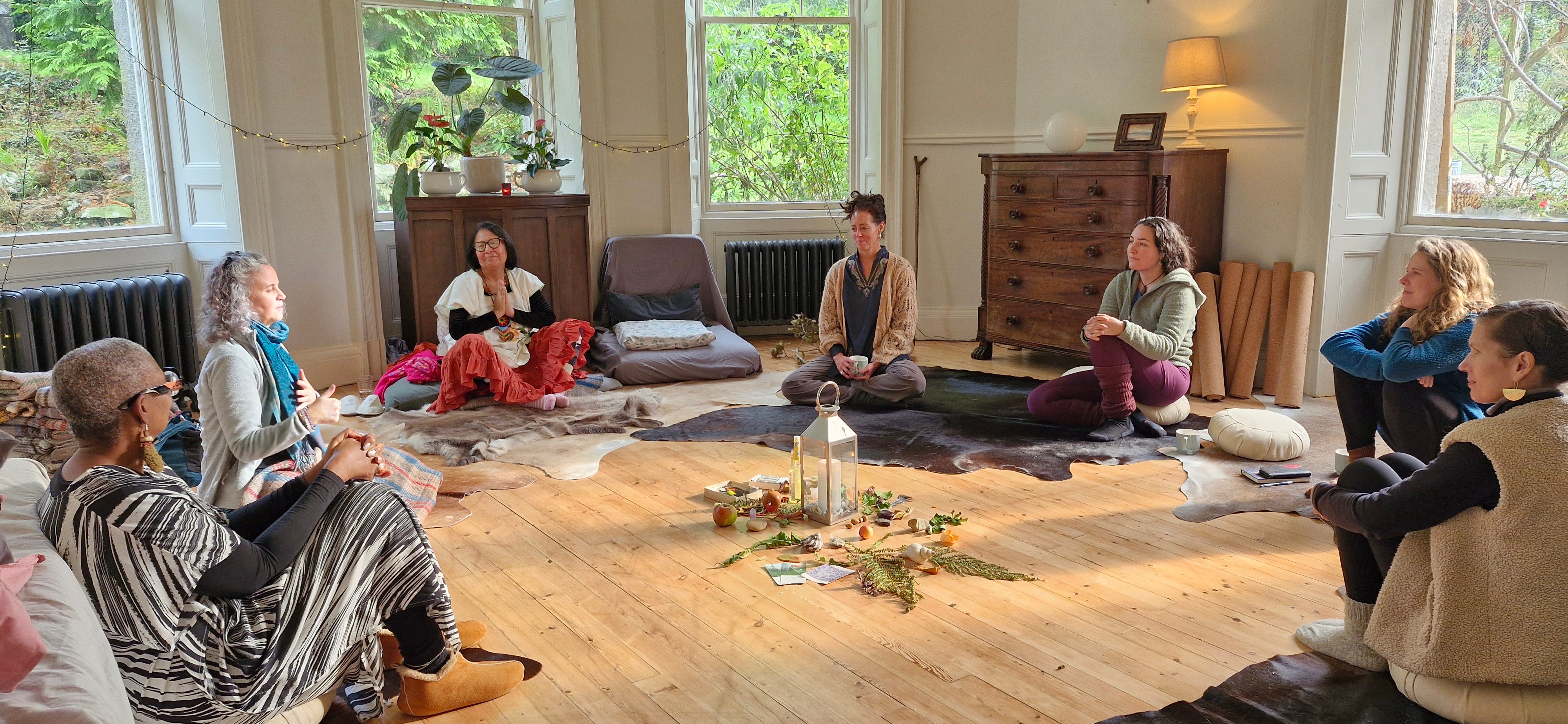
And last weekend, I attended a women’s retreat in Scotland. We supported each other to speak our truth on the pain we carry. But we also went beyond this, to share how we relate to our ancestors, and what belonging means to us.
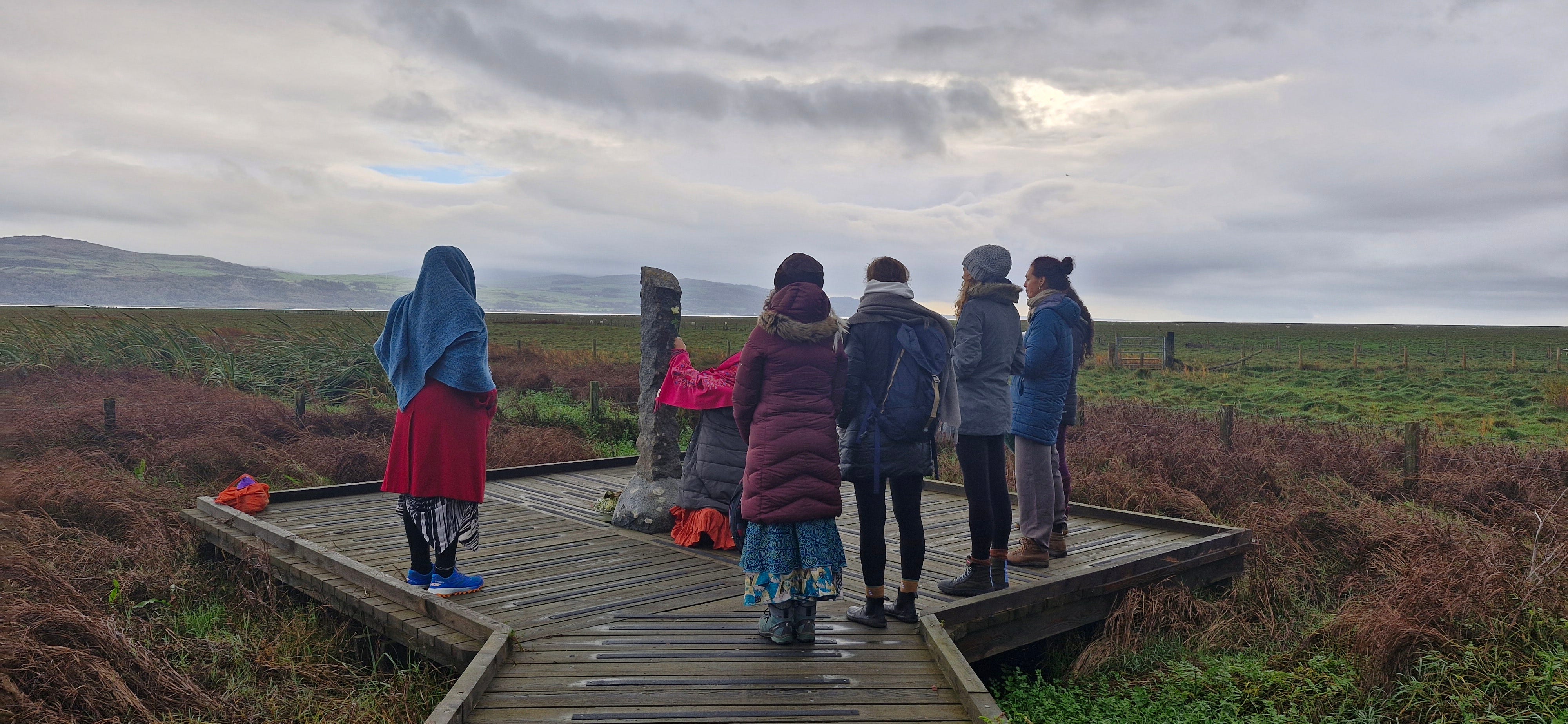
And on the last day, we took a walk to one of the nearby sacred sites: Martyr’s Stake, where two women – one of them only 18 years old – were killed in 1685 for their Covenanter beliefs, and is symbolic of the wider witch hunts which prevailed during that time. There, again, I wept. For the women who have gone before us – in this country and elsewhere – whose lives have been ended prematurely just because of who they are, what they represent, and the misguided judgements made against them.
It is not unusual for family or friends to say to be, somewhat dismissively, ‘why would you want to do that?’ As if the pain and sorrow that emerges from these experiences is needless, unnecessary.
Yet I know that something profound emerges when I attend these gatherings. We are put in touch with two vital aspects of our lives as humans, which are so often forgotten in our hyper-individualised drive and focus on our wellbeing, prosperity and security.
When we allow our sorrow for the world to flow through us, to really feel it, we remember more deeply our incredible, limitless capacity as humans for love and compassion – and just how important this is for helping overcome the suffering of all beings, not just ourselves.
We remind ourselves that we are not robots, nor are we numb to what is going on around us; in our feeling, we are alive, and full of fire and passion to end the pain of oppression and marginalisation.
These intentional gatherings also put us in touch with something greater than ourselves. There is an energy that moves through the group, when we sing together or mourn together or celebrate together in the form of ritual.
It is an energy that reminds us we are not alone, but part of a greater ecosystem of plants, animals and other humans; of ancestors and lineages and evolutionary cycles that make it possible for us to stand here now. We are both the drop in the ocean and the ocean itself. And we cannot fully know ourselves, be healthy and well, without engaging with this ecosystem.
Honouring the suffering that exists in this ecosystem, showing deep respect for all the elements that have brought us here and which keep us alive, reminds us that the healing we do can have a profound effect on our histories and our world as well as ourselves.
How do you tend to your grief for the world? What rituals support you? I would love to hear from you in the comments below x
Moving with grief as it arises cyclically, in the autumn season. Feeling held and nourished in the journey.